 Skip to content

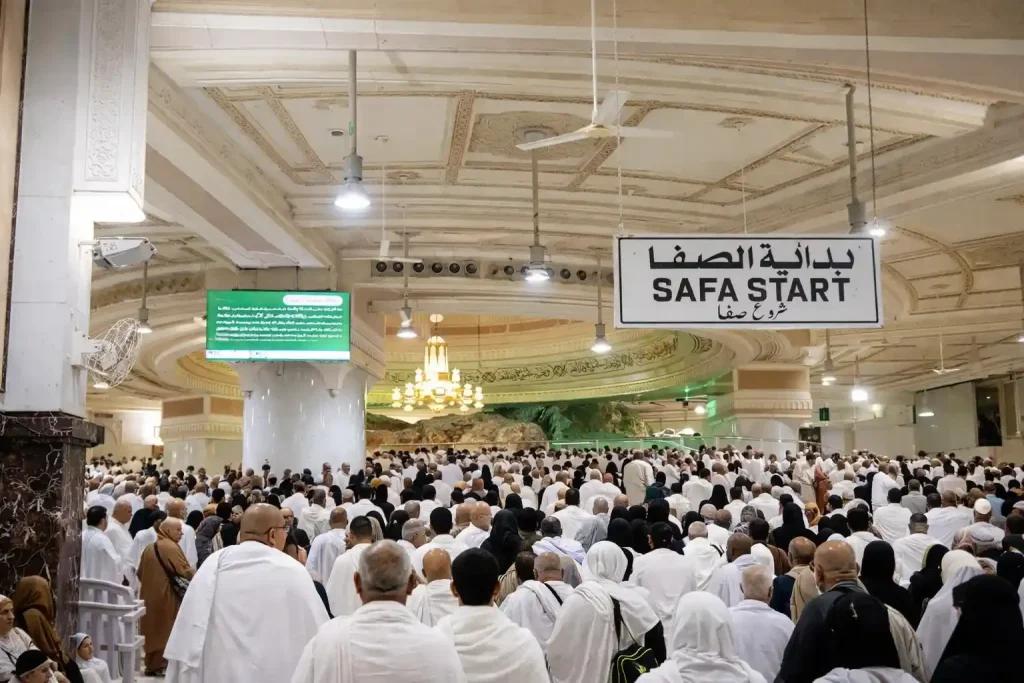
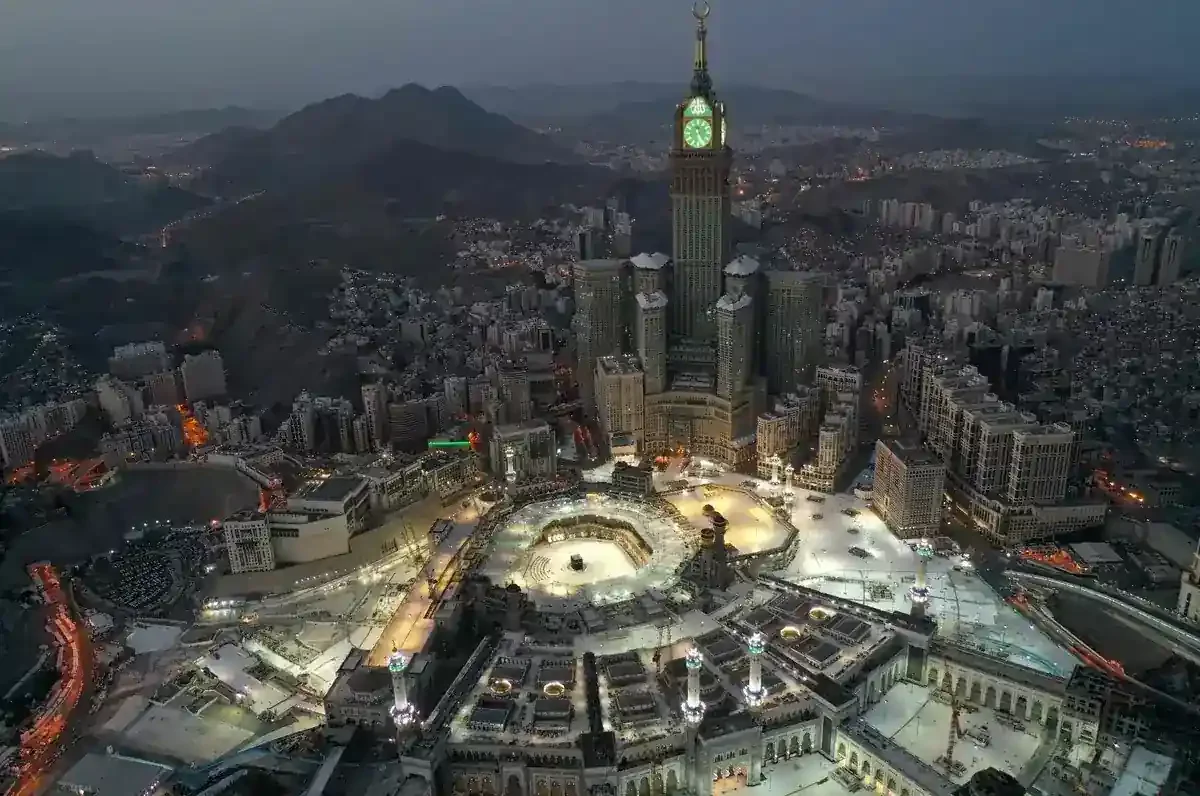
Safa and Marwa are two small hills inside Masjid al-Haram in Makkah that Muslims walk between seven times during Sa’i in Hajj and Umrah. Their history goes back to Hajar, the wife of Prophet Ibrahim (AS), who ran between Safa and Marwa searching for water for her baby Ismail until Allah.
If you’ve watched clips from Makkah, you’ve probably seen people walking back and forth in a long, bright corridor between two raised points. You know it’s important, but maybe you’re not fully sure why it matters so much. That corridor is between Safa and Marwa, and it holds one of the most emotional stories in the whole Umrah journey.
Many Umrah Travelers from the UK tell us the same thing: “I wish I’d understood the story before I went. It would have changed how I felt during Sa’i.” Once you know the history and Safa Marwa’s Importance, every step between those two hills starts to feel different, more personal, more focused, and much more powerful.
Let’s walk through that story together, so when you finally stand between Safa and Marwa, your heart already knows where your feet are going.
Where Safa and Marwa Sit in Your Umrah Journey
Inside Masjid al-Haram in Makkah, Safa Marwa are now part of the mosque itself: two small hills linked by a long gallery called the Mas’aa. Muslims walk back and forth between them seven times as part of Sa’i, one of the key rites of Hajj and Umrah.
For Umrah Travelers, Sa’i usually comes right after Tawaf of the Ka‘bah. You start at Safa, walk to Marwa, then back again, until you complete seven trips. The distance between the hills is about 450 metres, so all seven rounds together come to just over 3 km.
The companions themselves once hesitated about this ritual. Some of them thought that going between the two hills felt too close to old pre-Islamic customs, so they held back, until Allah revealed the verse in Surah Al-Baqarah:
” إِنَّ ٱلصَّفَا وَٱلْمَرْوَةَ مِن شَعَآئِرِ ٱللَّهِ ۖ فَمَنْ حَجَّ ٱلْبَيْتَ أَوِ ٱعْتَمَرَ فَلَا جُنَاحَ عَلَيْهِ أَن يَطَّوَّفَ بِهِمَا ۚ وَمَن تَطَوَّعَ خَيْرًۭا فَإِنَّ ٱللَّهَ شَاكِرٌ عَلِيمٌ “
“Indeed, ˹the hills of˺ Ṣafa and Marwah are among the symbols of Allah. So whoever makes the major or minor pilgrimage to the ˹Sacred˺ House, let them walk between ˹the two hills˺. And whoever does good willingly, Allah is truly Appreciative, All-Knowing…” (Qur’an 2:158)
In the hadith, Anas (RA) and A’ishah (RA) explain that this ayah came down about people who were unsure whether to perform Sa’i, and that the Prophet ﷺ firmly established walking between Safa and Marwa as part of the correct Hajj and Umrah rites.
On paper, it sounds like simple walking. In reality, it’s a replay of a desperate, hopeful search that happened thousands of years ago, through a mother, her child, and a valley that felt completely empty.
The Story Behind Safa Marwa – Hajar’s Search for Water
To understand Safa Marwa Importance, you have to go back to the family of Prophet Ibrahim (AS). Islamic tradition tells us that Allah commanded Ibrahim (AS) to leave his wife Hajar and baby Ismail in a barren valley near the Ka‘bah, with only a small amount of food and water.
When their provisions ran out, baby Ismail started crying from thirst. Hajar did what any loving mother would do when she sees her child in danger—she moved. She climbed the hill of Safa, looked around for help, saw nothing, then went down and crossed the valley to Marwa. From there, she looked again. Still nothing.
She didn’t give up. She went back and forth between Safa and Marwa seven times, running through the valley part where she couldn’t see her son, walking on the higher ground where she could check on him.
After that seventh time, Allah answered her effort and her du‘a. The angel Jibril (AS) appeared and caused water to burst from the ground near baby Ismail, the spring we now know as Zamzam.
The Story of Hajar & Ismail – Key Moments
You can think of the history of Safa Marwa as five simple scenes:
- Divine command: Ibrahim (AS) leaves Hajar and baby Ismail in the empty valley by Allah’s command.
- Desperation: Their food and water run out, and Ismail cries in thirst.
- The search (Sa’i): Hajar runs between Safa and Marwa seven times, scanning for caravans, people, anything. She can see her son from the hills but not in the valley, so she runs in the low part.
- Miracle of Zamzam: Jibril (AS) appears, and the water of Zamzam bursts from the ground beside Ismail.
- Naming the water: Hajar gathers the water and, as some narrations mention, calls out “Zam zam!” meaning “stop, stop” or “gather together,” hoping to contain the flow for her child.
From there, people begin to pass through the valley. The Yemeni tribe of Jurhum (Bani Jurhum) asks permission to settle near the water, and Hajar agrees. Over time, this blessed spring and new settlement become the starting point for what will grow into the city of Makkah.
The Qur’an itself mentions Safa and Marwa as “among the symbols of Allah” and makes it clear there is no blame for walking between them as part of Hajj and Umrah, turning Hajar’s lonely run into a guided, honoured ritual for the entire Ummah.
What Sa’i between Safa and Marwa Symbolises
For Muslims, Sa’i is not just a physical track; it’s a living symbol of:
- Faith under pressure – trusting Allah even when the desert looks empty.
- Perseverance – Hajar didn’t just make du‘a and sit; she moved, again and again.
- Divine mercy – Zamzam is a reminder that Allah can open doors from places that look completely closed.
Every time Muslims perform Sa’i, they are reenacting that search: walking or lightly running seven times between Safa and Marwa in Hajj and Umrah, physically living the lesson of “tie your camel and trust Allah.” This is why Safa Marwa’s Importance is such a big part of the emotional side of the pilgrimage.
Why Safa Marwa Still Matters for Umrah Travelers Today
So what does all this mean for Umrah Travelers coming from London, Birmingham, Manchester, or anywhere else in the UK? Why is Safa Marwa’s Importance still so strong today?
Because Hajar’s story feels very modern when you think about it:
- She was left in a place that looked hopeless.
- She had almost no resources.
- She had to make decisions fast for her child.
- She trusted Allah, but she also moved and did her part.
Many people planning Umrah now feel this way. You might be juggling work, bills, kids, health issues, or family worries. You save for months or years. You deal with flights, time off, and exchange rates.
When you walk between Safa and Marwa, you’re not just “ticking a box” in a ritual. You’re quietly saying:
“Ya Allah, I’m doing my part, step by step. I trust You with the rest.”
That’s the heart of Safa Marwa’s Importance. It’s about effort plus tawakkul (trust), fear plus hope. It’s about moving even when things feel unclear, believing that your Lord sees every step.
Practical Tips Before You Walk Between Safa and Marwa
A bit of simple preparation can make Sa’i smoother and more meaningful for Umrah Travelers. Here are easy, real-world tips:
Look after your body
Sa’i is not a sprint, but it’s not tiny either. You’ll cover a few kilometres overall.
- Wear comfortable, breathable clothing and suitable footwear (within the Ihram rules for men).
- Drink Zamzam and stay hydrated before you start.
- If you have knee, back, or mobility issues, consider taking short rests at the ends. There are areas and walkways designed to support elderly and disabled pilgrims as well.
Set your mindset
Before starting, remind yourself:
- You are following Hajar’s footsteps.
- You’re not just walking; you’re replaying a story of trust.
- Each lap between Safa Marwa can carry a specific du‘a or intention: your family, your health, your debt, your future.
Learn the basics, don’t overcomplicate
You don’t need to memorise long duas in Arabic to benefit. Many Umrah Travelers use short duas they know, or speak to Allah from the heart in their own language.
If you plan your Umrah Booking properly, choosing good timings, not rushing from the airport straight into crowded Sa’i, you’ll arrive with more focus, less stress, and a clearer head for worship.
How Good Umrah Booking Makes Your Safa Marwa Experience Easier
The way you plan your trip genuinely changes how you feel during Sa’i. This is where wise Umrah Booking comes in.
When you book with a UK-based specialist like Alhadi Travel, you’re not just buying flights and a hotel. You’re choosing:
- Flight timings that don’t leave you exhausted before you even start Tawaf.
- Hotel options that reduce long walks in extreme heat.
- Ground arrangements that give you enough time to perform Safa Marwa calmly, not in a rush.
For many families, especially those with children or elderly relatives, good planning and suitable Umrah Deals mean you’re not constantly worrying about money or logistics. You can give more attention to your ibadah instead of counting pounds and minutes.
Alhadi Travel works within UK regulations and Saudi guidelines, including ATOL protection and compliance with the Saudi Ministry of Hajj & Umrah, so you’re not left guessing about what’s allowed or how things work on the ground. (Always remember: visa rules, pricing, and airline policies can change, so it’s wise to double-check current details when you finalise your booking.)
Plan Your Umrah and Experience Safa Marwa with Confidence
When you finally reach Makkah and stand inside Masjid al-Haram, the walk between Safa Marwa will probably be one of the moments that stays with you for life. Knowing the story of Hajar, the Zamzam well, the hadith that “this is the source of the walking between them,” and the Qur’anic verse that calls these hills “among the symbols of Allah” turns Sa’i from “just walking” into a personal conversation with Allah, step after step.
If you’d like support choosing dates, sorting flights, or finding Umrah Deals that fit your budget and family situation, the Alhadi Travel team can help you plan your journey from the UK with practical, faith-aware guidance.