 Skip to content


The Black Stone of the Kaaba, known as Hajre Aswad, is a sacred stone set in the eastern corner of the Kaaba. Revered for its history and connection to the Prophets, it is honoured in Islam as a Sunnah during Tawaf, not as an object of worship.
When people talk about the Kaaba, the conversation usually turns to scale. The size of the courtyard. The movement of Tawaf. The number of pilgrims. Yet one of the most talked-about parts of the Kaaba is not large at all. It’s a small stone, set into one corner, easy to miss unless you know where to look.
That stone is the Hajre Aswad.
The Black Stone of the Kaaba has been part of Islamic worship from the earliest days. It has been touched, kissed, protected, argued over, stolen, returned, repaired, and honoured. And through all of that, its meaning has stayed remarkably consistent: it is respected, not worshipped; remembered, not relied upon.
Understanding its story helps pilgrims approach it with calm rather than confusion.
What the Black Stone Is and What It Is Not
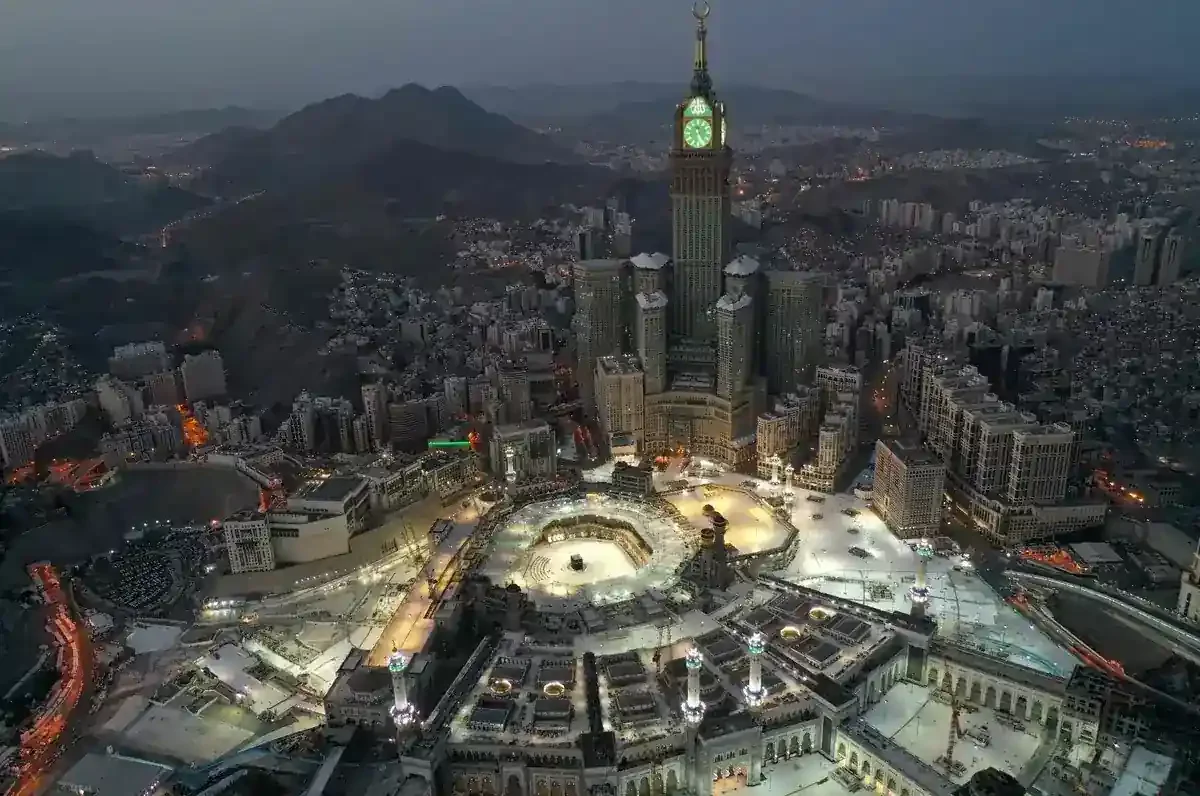
The Black Stone of the Kaaba is fixed in the eastern corner of the Kaaba in Masjid al-Haram. It marks the point where Tawaf begins and ends. Today, it appears as several dark pieces held together inside a silver frame.
Islam is clear on one thing from the start. The stone itself holds no divine power. It does not grant forgiveness on its own. It does not bring blessings by force. Its value comes from its history and from the actions of the Prophet ﷺ.
That distinction matters. Without it, reverence can easily turn into misunderstanding.
Learn more on:- umrah package
The History of Black Stone: From Ibrahim to Today
The History of Black Stone reaches back to Prophet Ibrahim (AS).
Islamic tradition holds that when Allah commanded Ibrahim (AS) to build the Kaaba, Angel Jibreel (AS) brought him the stone to place in its corner. Some narrations describe the stone as coming from Paradise, originally white, and later darkened over time.
Centuries later, when the Kaaba was rebuilt by the Quraysh tribe, a serious dispute arose. Every clan wanted the honour of placing the stone. The situation was tense. Violence was close.
Prophet Muhammad ﷺ resolved the issue with a simple idea. He placed the stone on a cloth and asked each tribe to hold a corner. Together, they lifted it. Then he placed the stone himself.
It wasn’t dramatic. It was sensible. And it turned a conflict into cooperation. That moment alone explains why the Hajre Aswad carries meaning far beyond stone.
Damage, Theft, and Preservation
The Hajre Aswad has not been protected by isolation. It has lived through history.
At one point, it was buried for safekeeping. At another, it was damaged during attacks on Makkah. The most severe incident came when the Qarmatians stole the stone and removed it from the Kaaba for more than twenty years.
When it was finally returned, it was no longer whole.
Muslim leaders repaired and preserved it as carefully as possible. Figures such as Abdullah ibn Zubayr and later caliphs added protective silver casings. What remains today is not one smooth stone, but several fragments secured together.
Its condition tells a quiet story: faith survives damage.
The Importance of Hajre Aswad in Worship
The Importance of hajre aswad lies mainly in practice, not belief.
During Tawaf, pilgrims begin each circuit at the point of the stone. If possible, they may touch or kiss it. If not, they gesture toward it and continue walking.
This act follows the Sunnah of the Prophet ﷺ. Nothing more is required.
Hazrat Umar (RA) expressed this balance perfectly when he said that he knew the stone could neither harm nor benefit, and that he honoured it only because he saw the Prophet ﷺ do so.
That single statement protects Islamic belief from excess. Respect is allowed. Worship is not.
Symbolism Without Superstition
Over time, many meanings have been attached to the Hajre Aswad.
Some narrations mention that touching it helps wipe away sins. Others say it will testify for believers on the Day of Judgment. Meanwhile, these ideas are understood within a broader Islamic framework: sincerity matters more than motion, and intention matters more than contact.
The stone does not cleanse on its own. Repentance does.
This is why Islam never asks pilgrims to push, argue, or harm others to reach it. If a person cannot get close, their worship is still complete.
Experiencing the Hajre Aswad During Umrah
For many people, their first encounter with the Hajre Aswad happens when they perform Umrah.
The crowd is dense. Movement is slow. Emotions are high. This is where knowledge becomes grounding. Understanding the limits of the Sunnah helps pilgrims stay calm.
This is also where Ihram Importance becomes practical. Ihram is not just clothing. It is behaviour. Patience, restraint, and awareness of others are part of the worship itself.
Many pilgrims on organised Umrah Trips are advised to acknowledge the stone from a distance and focus instead on prayer and reflection.
Clearing Common Misunderstandings
A few misconceptions often appear around the Hajre Aswad.
- Touching it is not compulsory.
- Missing it does not invalidate Tawaf.
- It does not carry independent power.
Islam consistently places belief above objects and meaning above mechanics.
Once that is understood, the stone becomes what it was always meant to be: a marker, not a miracle.
Why This Story Still Matters
The Hajre Aswad connects generations.
- It connects Prophet Ibrahim (AS), placing it into the Kaaba.
- It connects the Prophet ﷺ, resolving conflict with wisdom.
- It connects pilgrims today who walk the same path with different languages and lives.
The Black Stone of Kaaba reminds Muslims that faith is not built on spectacle. It is built on obedience, restraint, and memory.
A Final Reflection!!!
For those planning their journey through Umrah Packages or starting early with Umrah Booking, understanding sacred elements like the Hajre Aswad adds depth to the experience. It removes pressure. It replaces urgency with calm.
Meanwhile, If you ever need guidance, learning support, or travel planning rooted in clarity and respect, Alhadi Travel is always here. And if questions arise along the way, you’re welcome to contact us for calm, UK-based advice.