
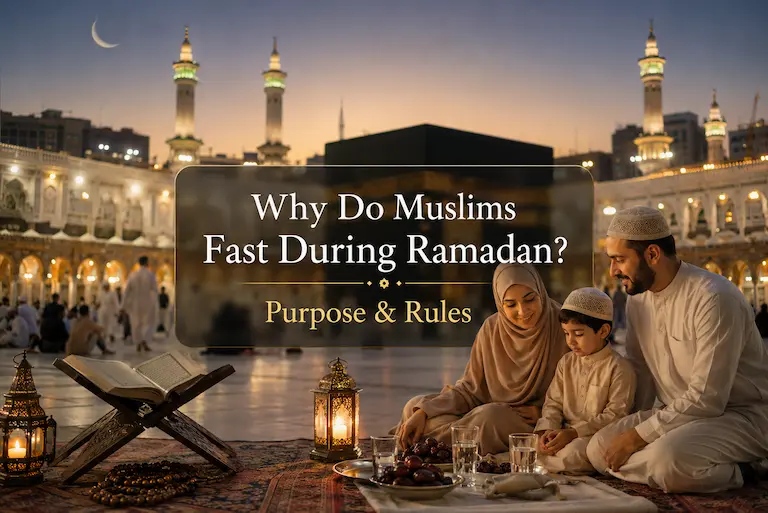
Thinking that this month is only about staying hungry completely misses the point. When the holy month arrives, daily routines change completely so people can focus on their faith instead of their food. But why do Muslims fast during Ramadan?
At its heart, this month is celebrated because it is when God first gave the Holy Quran to the Prophet Muhammad (PBUH). Choosing to fast is a special decision. It is about cleaning your heart, learning self-control, and feeling closer to God.
Fasting changes how families spend their day, bringing everyone together at the dinner table to pray and eat. Feeling that empty stomach also helps people understand what it is really like for millions of poor people around the world who don’t have enough food to eat.
Importance of Ramadan Obligation in Islam
Fasting for these thirty days isn’t just a lifestyle choice. But it is actually one of the Five Pillars of Islam and a necessary obligation. It means it forms the absolute baseline for a Muslim’s daily life and faith.
The Holy Quran spells out this duty in Surah Al-Baqarah (2:183):
“O you who have believed, decreed upon you is fasting as it was decreed upon those before you that you may become righteous.”
This clarifies why do muslims fast. And when you fast, you show your direct love and devotion to God secretly. It is a yearly reality check that reminds believers to put their spiritual duties ahead of basic physical urges like food and water.
There is also something incredibly powerful about millions of people doing this all at the same time. Whether it’s in local UK neighbourhoods or communities across the world, it builds a massive sense of unity. It proves that people can easily control their physical habits when they are focused on a higher purpose.
The Spiritual Meaning and Symbolism of Ramadan
Ramadan is essentially a chance to hit the reset button, a dedicated month to let go of bad habits and reclaim your inner peace. Islamic scholars often dub this the “Month of the Quran.” They are honouring the specific night the Angel Gabriel first brought divine revelations down to earth. This happened during the final ten nights of the month, a night revered as Laylat al-Qadr (the Night of Power).
Two visual anchors hold massive weight throughout this month:
- The Crescent Moon: Spotting that first sliver of silver in the night sky officially kicks off the journey. However, it is a visual cue that life moves in chapters. Also offers everyone a clean slate to fix past mistakes.
- The Chained Devils: Prophetic tradition narrates that the gates of heaven swing open while spiritual obstacles and devils are locked away. The takeaway? The runway to do good is wide open, leaving you to look squarely at your own heart without outside excuses.
Essential Ramadan Rules and Exemptions
The core mechanics of Ramadan demand that healthy adults completely bypass specific actions during daylight hours. It is an exercise designed to construct serious self-discipline. That said, Islam is fundamentally a practical faith focused on preserving human health. The legal framework of Sharia builds in strict, compassionate safety nets for anyone whose health would be compromised by skipping meals. Now you are familiar with why do muslims fast, now lets learn the deep rules and exemptions.
Strict parameters to maintain from dawn until the evening call to prayer:
- Eating food
- Drinking liquids
- Smoking or vaping
- Marital intimacy
- Engaging in gossip or lies
- Picking arguments and fights
Those who bypass the fasting requirement entirely:
- Young children
- The elderly and frail
- People managing chronic illnesses
- Pregnant or breastfeeding mothers
- Women during their monthly period
- Anyone travelling long distances
- Individuals dealing with temporary sickness
The Purpose and Triple Benefits of Fasting
Understanding the deep logic of why Muslims fast requires looking at the practice through three distinct lenses: the spiritual, the social, and the physiological.
Spiritual Cleansing and Devotion to God
The primary target here is building Taqwa—a state of constant, active God-consciousness. When you willingly walk away from basic biological needs like water out of pure devotion, you train your spiritual willpower to become incredibly resilient.
During these weeks, keeping a tight lid on your temper or avoiding bad-mouthing others is just as non-negotiable as staying away from food. It works as a total behavioural recalibration, forcing you to drop toxic routines and actively practice kindness.
Building Deep Empathy for the Less Fortunate
Fasting brings everyone down to the exact same level. Everyone strips away wealth and social status. And every single person deals with the same dry throat, rumbling stomach, and afternoon exhaustion.
Feeling this hunger firsthand connects rich and poor alike. However, it gives you a real taste of what millions of families face every single day. You can say this is the main purpose of Ramadan. This personal experience is exactly why Ramadan triggers such an incredible wave of charity worldwide, inspiring communities to jump in, organise food drives, and fund local soup kitchens.
The Proven Physical and Mental Health Benefits
Modern science is finally catching up to what these traditional practices have maintained for centuries. Recent studies on intermittent fasting show that giving your digestive system a regular break offers real health advantages. However, scientifically, it is also proven why do muslims fast. Here are the benefits.
- Full Body Reset: Fasting directly stabilises blood sugar curves, cools down systemic inflammation, and gives overworked digestive tracks an explicit window to heal.
- Cellular Clean-up: Going without food kicks off autophagy. You know, the good thing is, it’s an internal recycling crew. However, it breaks down damaged cellular debris and makes room for fresh, high-performing cells.
- Sharper Brain Power: Also, the fasting state triggers proteins that support brain health. However, it frequently manifests as sharp mental clarity, heightened focus, and balanced moods.
The Ultimate Spiritual Connection: Ramadan and Umrah
Ramadan offers a powerful window to seek the blessings of Allah. However, performing Umrah in Ramadan brings the experience to the absolute peak of worship. The atmosphere of the holy month already supercharges individual prayers and reflection. Taking that mindset directly to Makkah scales the experience immensely. Spending hot days fasting and long nights standing in congregational prayers creates an unforgettable spiritual bond.
The energy sweeping through the holy cities during this time is completely unique, pulling in millions of visitors annually. Because logistics fill up incredibly fast, travellers typically map out their bookings months ahead to secure a spot during this window.
Essential Facts About Ramadan and the Lunar Calendar
Ramadan is dictated entirely by the Islamic lunar calendar, not the solar Gregorian calendar used in Western business. Because of this structural difference, the start date of the holy month slides backward by roughly 10 to 11 days every year. The entire timeline hinges on verified local sightings of the new crescent moon, which explains why regional start dates can occasionally split by a day.
A fundamental takeaway is that a Ramadan cycle lasts either 29 or 30 days. This fluid setup ensures that over a human lifetime, a Muslim will experience the fast across every single season, from short, cold winter days to gruelling summer stretches.
To track how these shifting moon phases operate and pinpoint exact timelines, check out our When is Ramadan 2027 guides:
Conclusion:
Ramadan is a special month for muslims to seek the blessings of Allah. However, it is not about a temporary 30-day period. But it is an intentional incubator for self-mastery, personal accountability, and a deeper relationship with God. Fasting teaches the practical realities of patience, gratitude, and genuine empathy.
The real metric of a successful Ramadan is what happens after it ends. The goal is to take the discipline, charitable habits, controlled temper, and the dedication developed in isolation and integrate them seamlessly into the remaining eleven months of the year.
At the end of the day, the answer to why Muslims fast cuts far deeper than hunger pangs. They fast to clear the clutter from their hearts, step up their character, and build a lasting bond with Allah.